1. FBR Chairman Announces Plans to Gradually Eliminate Super Tax
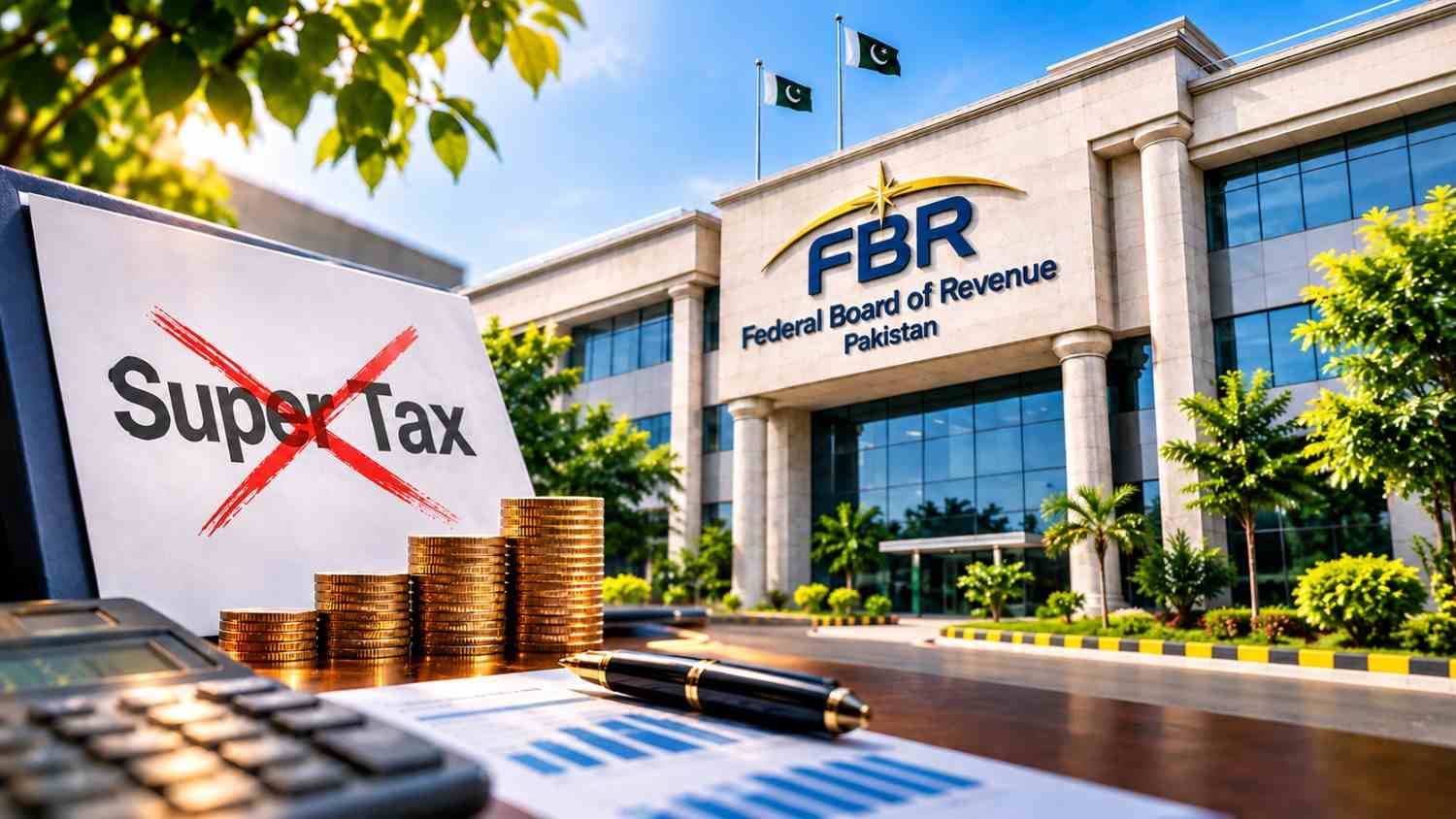
Pakistan's Federal Board of Revenue (FBR) Chairman Rashid Mahmood Langrial has announced that the federal government intends to completely abolish the super tax through a gradual process as part of broader efforts to improve the country's taxation system.
The announcement was made during a meeting with representatives of the Korangi Association of Trade and Industry (KATI) in Karachi on Wednesday, November 4, 2026.
According to reports published by Dawn and The Express Tribune on November 5, Langrial confirmed that the super tax rate had already been reduced by two percentage points and that work on its gradual elimination had begun.
The development reflects the government's intention to reduce additional taxation on businesses while creating a more favourable environment for industrial activity and investment.
The super tax is an additional levy imposed on qualifying higher-income taxpayers under Pakistan's income tax framework. It has been a longstanding concern among businesses that argue additional taxation increases operating costs and reduces competitiveness.
However, the FBR chairman did not announce a specific deadline for completely abolishing the tax or provide a detailed schedule for future reductions.
Key details of the announcement:
Announcing official: FBR Chairman Rashid Mahmood Langrial.
Meeting date: November 4, 2026.
Location: Korangi Association of Trade and Industry, Karachi.
Government's stated intention: Gradual elimination of super tax.
Reported reduction: Two percentage points already reduced.
Future reductions: Further phaseout under consideration.
Complete abolition date: Not officially announced.
Current status: The tax remains applicable under existing law.
The distinction between a proposed phaseout and an enacted tax abolition is important.
Although the government has expressed its intention to remove the super tax, further changes will require the relevant policy decisions and legal measures.
Until those changes are formally implemented, affected taxpayers must continue to comply with applicable tax obligations.
2. FBR Announces Business Facilitation Measures for Industrialists
Alongside the super tax announcement, Rashid Mahmood Langrial outlined several initiatives aimed at resolving taxation difficulties faced by Pakistan's industrial and business communities.
The FBR chairman announced plans to establish a dedicated FBR office at the Korangi Association of Trade and Industry to help industrialists address tax-related problems more efficiently.
The proposed office is intended to improve communication between the tax authority and businesses operating in the Korangi Industrial Area.
Langrial also said the FBR would expand its help desk services beyond Karachi to Sukkur, providing additional administrative support to taxpayers.
Another major issue discussed during the meeting concerned difficulties in importing raw materials.
The FBR chairman assured business representatives that the authority would consult relevant stakeholders to identify shortcomings in import procedures and explore possible improvements.
Representatives of the leather industry also raised concerns about border trade, prompting assurances that further meetings would be held to discuss their difficulties.
The pharmaceutical sector was another area of focus.
Langrial discussed plans to strengthen the FBR's Track and Trace System through an approach informed by the Drug Regulatory Authority of Pakistan (DRAP).
The proposed improvements are intended to make tax monitoring more effective while supporting transparency and regulatory compliance.
Major business facilitation measures include:
Dedicated FBR office: Planned establishment of an office at KATI.
Expanded taxpayer support: Extension of help desk services from Karachi to Sukkur.
Import procedures: Consultation with businesses on raw-material import difficulties.
Leather industry: Discussions to resolve border trade problems.
Pharmaceutical sector: Improvements to the Track and Trace System.
Tax administration: Greater emphasis on transparency and compliance.
Industry coordination: Closer cooperation between FBR officials and business representatives.
During the meeting, KATI President Sheikh Umer Rehan proposed creating a joint committee to address tax-related problems and strengthen coordination between industrialists and government institutions.
The business community also highlighted the importance of timely tax refunds, simpler procedures and improved administrative efficiency.
Langrial urged traders and industrialists to cooperate with the FBR in identifying tax evasion and supporting a more transparent taxation system.
He emphasised that strengthening tax compliance remains important even as the government considers reducing the additional tax burden on businesses.
3. What the Proposed Super Tax Phaseout Means for Pakistan's Economy
The government's stated intention to gradually abolish the super tax could become an important development for Pakistan's business environment.
Businesses have repeatedly raised concerns about the impact of additional taxation on profitability, industrial competitiveness and future investment decisions.
A gradual reduction in the levy could ease the tax burden on qualifying companies and provide greater flexibility for business expansion.
It could also support investor confidence if implemented through a clear and predictable taxation framework.
However, the economic impact will depend on the actual tax changes adopted, the sectors covered and the timing of implementation.
The proposal also raises important questions about how the government would manage any resulting reduction in tax revenue.
Pakistan continues to face significant fiscal challenges, making the balance between taxpayer relief and revenue collection an important consideration.
Any future decision to abolish the super tax would therefore need to be assessed alongside the government's wider fiscal requirements and taxation priorities.
Potential implications of the proposed reform include:
Lower business tax burden: Qualifying taxpayers could benefit from future rate reductions.
Improved investment environment: A more predictable tax structure may support investment planning.
Industrial competitiveness: Lower additional taxation could improve the financial position of affected businesses.
Tax administration: Business facilitation measures could reduce procedural difficulties.
Revenue considerations: The government would need to manage the fiscal implications of further reductions.
Policy certainty: A formal implementation schedule would help companies assess the potential benefits.
The announcement also comes amid legal proceedings concerning Pakistan's existing super tax framework.
The Federal Constitutional Court recently reserved its decision on petitions seeking a review of its earlier ruling concerning the validity of the levy.
Those legal proceedings are separate from the government's stated policy intention to gradually eliminate the tax.
A future abolition would require the appropriate legal and fiscal steps rather than taking effect solely through the FBR chairman's announcement.
For industrialists, the next important development will be whether the government outlines a formal timeline for the remaining reductions.
Businesses will also be watching for progress on the FBR's announced administrative reforms, including taxpayer facilitation offices, improved import procedures and resolution of refund-related concerns.
The development signals a possible shift toward reducing additional taxation on businesses, although its ultimate economic impact will depend on how the proposed reforms are implemented.
Editor's Note
Radar Pakistan will continue monitoring government announcements regarding the proposed gradual abolition of super tax, including any further rate reductions, legislative changes and official implementation timelines. As of November 5, 2026, the government has expressed its intention to phase out the levy, but a complete abolition date has not been announced.