
1. Elon Musk’s SpaceX Share Pledge Draws National Attention
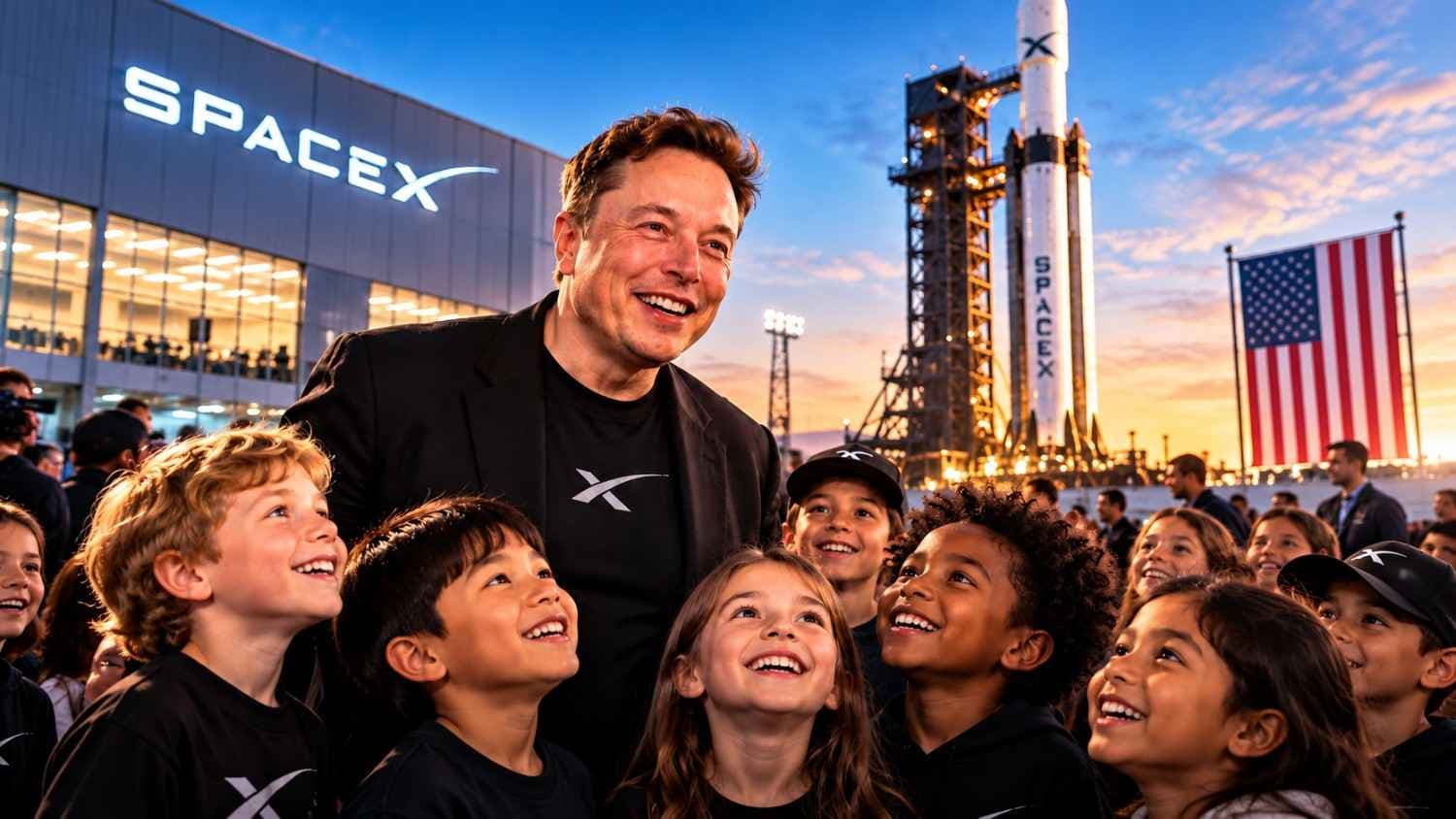
Elon Musk, the billionaire entrepreneur and founder of SpaceX, has reportedly announced plans to provide every child in the United States with one share in his privately held aerospace company in 2027.
The proposal, if implemented, would represent an unusual expansion of equity ownership in a major private technology company, potentially allowing millions of American children to hold a financial interest in SpaceX.
The announcement has generated discussion about financial inclusion, long-term wealth creation, and the role of private companies in expanding investment opportunities for younger generations.
SpaceX is widely recognized for its reusable rocket technology, commercial space missions, satellite internet services, and ambitions to support future human exploration of Mars. Its commercial development and technological achievements have made it one of the most closely watched companies in the global aerospace industry.
Key details of the reported pledge include:
Company: Space Exploration Technologies Corp. (SpaceX).
Founder: Elon Musk.
Proposed beneficiaries: Children across the United States.
Planned allocation: One SpaceX share per eligible child.
Target year: 2027.
Implementation status: The proposed distribution has not been completed, and detailed eligibility and transfer arrangements remain to be established.
While the proposal has attracted widespread attention, a public pledge does not by itself establish a legally binding share-distribution programme. Additional information would be needed to determine how the shares would be allocated and administered.
2. Financial Implications and Potential Impact on Young Americans
The proposed distribution could have significant financial and administrative implications because SpaceX operates as a privately held company rather than a publicly listed corporation.
Unlike shares in companies traded on major stock exchanges, SpaceX equity is not ordinarily available to retail investors through conventional brokerage accounts. Private-company ownership is generally subject to transfer restrictions, shareholder agreements, and other legal requirements.
Distributing shares to millions of children would therefore require a clearly defined framework for recording ownership, protecting recipients' interests, and managing transfers on behalf of minors.
The potential financial value of the programme would depend on the valuation of SpaceX shares at the time of distribution and the specific class of equity transferred.
Several important considerations remain:
Equity valuation: The financial value of each allocation would depend on the applicable share price and valuation methodology.
Ownership rights: The company would need to clarify whether recipients would receive ordinary shares, restricted equity, or another form of ownership interest.
Eligibility requirements: Detailed rules would be necessary to determine which children qualify and whether age, citizenship, or residency conditions apply.
Legal administration: Ownership by minors may require custodial accounts, trusts, or another legally compliant structure.
Liquidity limitations: Even if children receive shares, they may not be able to sell them immediately because SpaceX remains privately held.
Long-term financial exposure: The value of any allocated equity could increase or decrease depending on the company's future performance and market conditions.
The proposed initiative could also encourage broader discussion about access to investment opportunities, particularly as policymakers and financial institutions examine ways to improve long-term savings and asset ownership among younger populations.
However, the potential benefits should not be confused with guaranteed financial returns. Ownership in a private company carries valuation uncertainty, liquidity constraints, and investment risk.
3. SpaceX’s Market Position and the Broader Push for Youth Investment
Musk's announcement comes at a significant time for SpaceX, which completed its stock market debut in June 2026. The company's shares now trade publicly under the ticker symbol SPCX, giving investors direct access to a business previously known for its privately held ownership structure.
The proposed giveaway could become one of the largest individual share donations in corporate history.
Based on approximately 72 million potential recipients and SpaceX's October 16 closing share price of $146.03, the distribution would have an estimated market value of roughly $10.5 billion. The final figure would depend on the number of eligible children and the market price when the shares are transferred.
The announcement also follows growing interest in investment programmes designed to help children accumulate financial assets from an early age.
SpaceX President Gwynne Shotwell has separately pledged more than $320 million in company shares to support investment accounts for over two million children. Meanwhile, the US government's Trump Accounts initiative seeks to encourage long-term savings and investment for eligible young Americans.
Musk's proposed distribution stands out because of its potentially nationwide reach.
If completed, the initiative could introduce millions of young Americans to equity ownership and allow them to participate financially in SpaceX's future performance. Nevertheless, share ownership would expose recipients to normal stock market risks, including price fluctuations and possible losses.
The announcement also leaves several questions unresolved, particularly regarding the administration of the programme, the treatment of children who reach adulthood during 2027, and the procedures families would need to follow.
For now, Musk's statement represents a publicly announced commitment rather than a completed financial distribution. Further clarification will be essential to determine whether the initiative can be implemented at the scale described.