
1. Government Announces New Petrol and Diesel Prices Across Pakistan
The federal government has announced a reduction in petroleum product prices, providing relief to consumers facing rising living expenses and transportation costs.
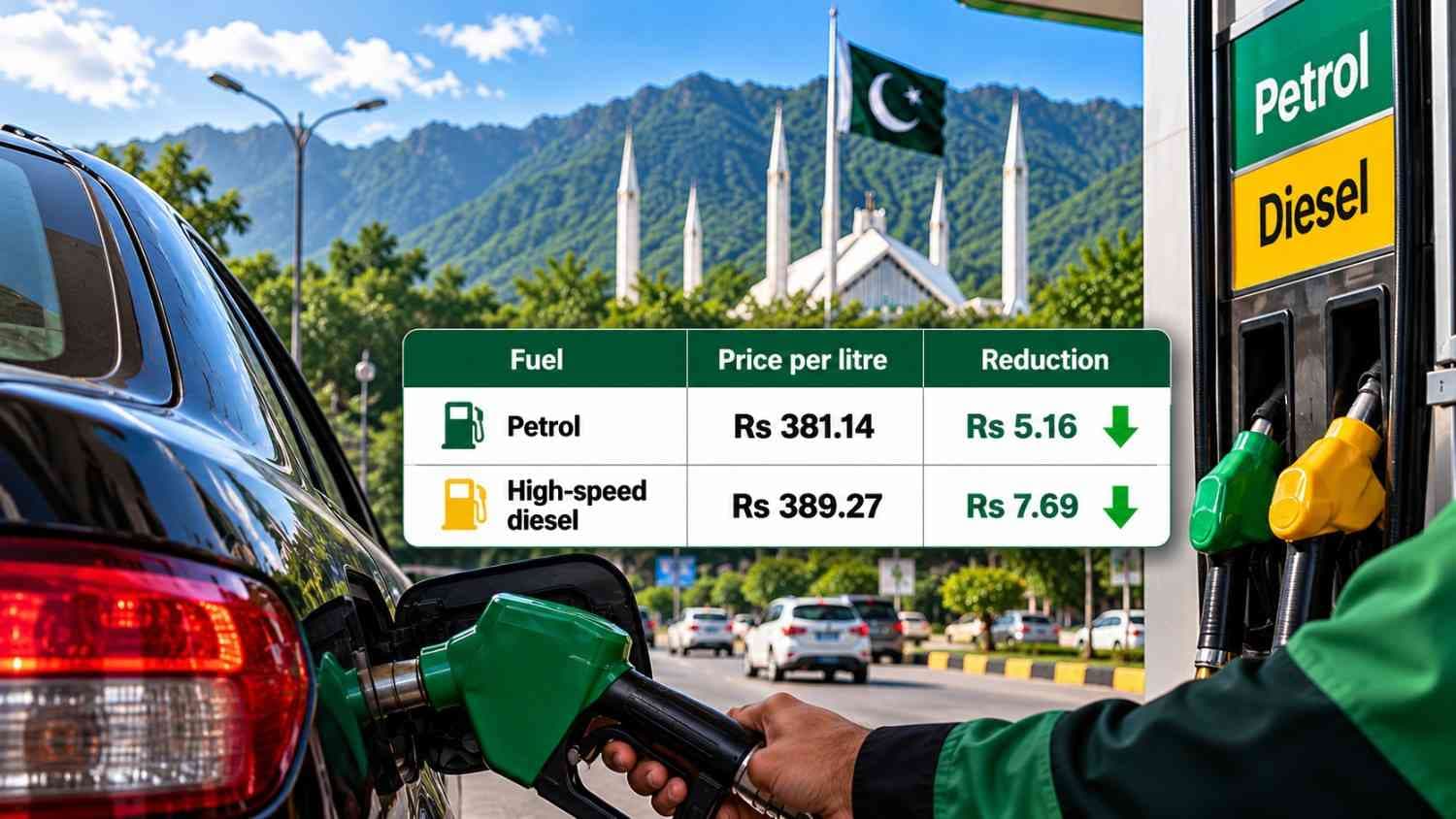
According to the latest reported price adjustment, petrol has been reduced by Rs5.16 per litre, while high-speed diesel has become cheaper by Rs7.69 per litre. The revised rates take effect from October 20, 2026.
The decision comes as fuel prices remain an important factor influencing Pakistan's transportation sector, business operations, and household expenditure.
Petrol is widely used in motorcycles, cars, and other private vehicles, making changes in its price particularly relevant to daily commuters. High-speed diesel, meanwhile, plays a critical role in public transport, commercial freight, agriculture, and industrial operations.
Key details of the latest fuel price adjustment include:
Petrol price reduction: Rs5.16 per litre.
High-speed diesel reduction: Rs7.69 per litre.
Revised petrol price: Rs381.14 per litre.
Revised diesel price: Rs389.27 per litre.
Effective date: October 20, 2026.
Geographical coverage: Pakistan.
The revised prices represent a modest reduction in fuel expenses for motorists and businesses that depend heavily on petroleum products.
For an individual purchasing 40 litres of petrol, the reduction of Rs5.16 per litre translates into savings of approximately Rs206.40 compared with the previous rate.
Similarly, a commercial vehicle purchasing 100 litres of diesel would save approximately Rs769 at the revised price.
Although these savings may appear limited on individual purchases, their cumulative impact can become more significant for transport businesses and consumers who regularly purchase large quantities of fuel.
2. Lower Fuel Prices Could Ease Transportation and Household Expenses
The latest reduction comes at a time when Pakistan's economy remains sensitive to changes in international oil prices, transportation expenses, and the cost of essential commodities.
Fuel prices have a direct influence on household spending because millions of Pakistanis depend on motorcycles, cars, buses, and commercial transport for daily travel.
The reduction in petrol prices is expected to provide immediate, although limited, savings for motorists. Meanwhile, the decrease in high-speed diesel prices could help reduce operating costs for transport companies, agricultural businesses, and commercial freight operators.
Diesel is particularly important to Pakistan's supply chain because it powers a substantial portion of the country's heavy transportation and agricultural machinery.
Lower diesel costs can potentially ease the expenses associated with transporting food, agricultural products, construction materials, and other essential goods.
However, the extent to which these savings reach consumers will depend on whether transport operators and businesses adjust their charges.
Potential economic benefits include:
Daily commuters: Reduced petrol expenses for motorcycle riders, car owners, and regular travellers.
Public transportation: Lower operating costs for diesel-powered buses and commercial passenger vehicles.
Agriculture: Potential savings for farmers using diesel-powered machinery, irrigation systems, and transport equipment.
Goods transportation: Reduced fuel expenditure for trucks and logistics companies transporting products between cities.
Household budgets: Modest financial relief for families managing recurring transportation expenses.
Despite the reduction, petroleum products remain expensive for many households, particularly those with limited disposable income.
The latest adjustment is therefore likely to provide short-term relief rather than a substantial reduction in the overall cost of living.
3. Global Oil Market Volatility and Pakistan's Daily Fuel Pricing System
Pakistan's latest petroleum price adjustment comes amid continued volatility in international energy markets, where geopolitical developments, supply concerns, and fluctuations in crude oil prices have influenced domestic fuel costs.
The country relies significantly on imported petroleum products and crude oil, making local fuel prices sensitive to international market conditions and exchange-rate movements.
According to reporting by Dawn and Geo News, the government has adopted a daily petroleum price review mechanism, replacing the previous weekly and fortnightly arrangements. Under the revised framework, the Oil and Gas Regulatory Authority (OGRA) publishes updated fuel prices to reflect movements in international markets more frequently.
Petroleum Minister Ali Pervaiz Malik has explained that the pricing framework uses a rolling seven-day average of international petroleum prices, allowing changes in global markets to be reflected more regularly in domestic rates.
The revised system is intended to improve transparency and reduce delays in passing international price movements to consumers.
However, more frequent adjustments also mean that domestic fuel prices may change rapidly when global oil markets experience significant fluctuations.
Key factors influencing future petroleum prices include:
International crude oil prices: Changes in global supply and demand can affect Pakistan's petroleum import costs.
Pakistani rupee exchange rate: Currency depreciation can increase the local cost of imported fuel.
Government taxes and levies: Petroleum levies and other duties contribute to final consumer prices.
Geopolitical developments: Conflicts and disruptions affecting international energy supply routes can influence oil prices.
Domestic pricing policy: The daily review mechanism allows fuel prices to respond more frequently to international market conditions.
The Petroleum Division confirmed that the October 20 reduction brought petrol to Rs381.14 per litre and high-speed diesel to Rs389.27 per litre. These rates apply to the announced pricing period and may be revised under the daily mechanism.
While the latest reduction offers some immediate relief, sustained improvements in fuel affordability will depend on global oil market stability, currency conditions, and future government pricing decisions.