
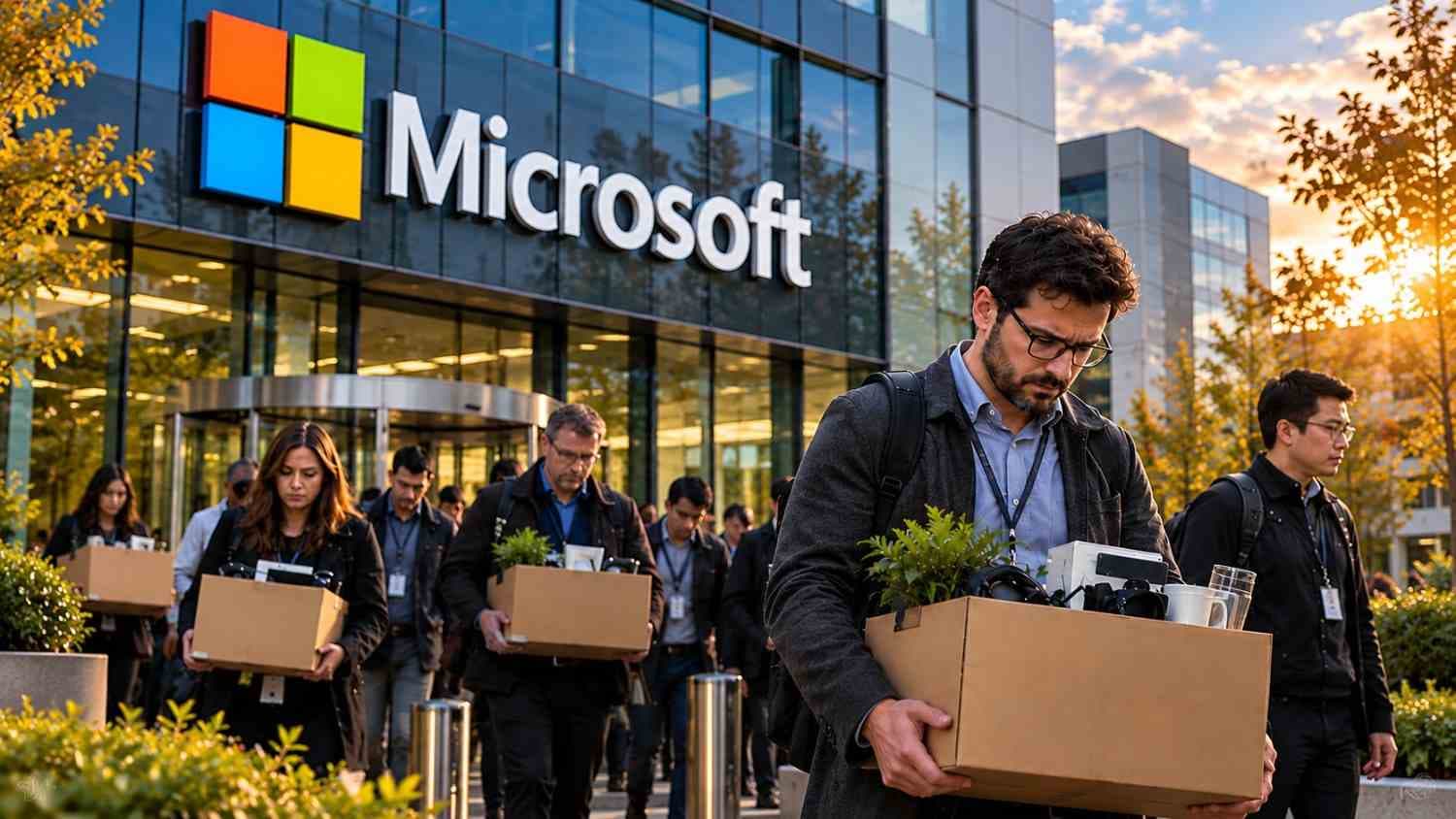
1. Microsoft Offers Voluntary Exit Packages to Around 60,000 Employees
Microsoft announced a new voluntary employee exit programme on October 26, 2026, offering financial support to approximately 60,000 eligible workers as the company adjusts its workforce to changing business priorities.
The initiative, officially called the Voluntary Exit Offer (VEO), allows eligible employees to leave the company voluntarily with financial assistance and career planning resources.
Microsoft confirmed the programme in an official communication from Amy Coleman, its executive vice president and chief people officer.
The offer is available to selected employees in four countries:
United States
United Kingdom
Canada
India
The programme covers eligible employees at internal level 70 and below, including some senior leadership positions. However, not every Microsoft department is participating.
According to Reuters, the initiative includes selected employees working in AI Experiences, Copilot, finance, human resources, Xbox and Windows & Devices.
Some departments, including marketing, commercial business and security, are excluded from the current programme.
Key facts about Microsoft's announcement:
Announcement date: October 26, 2026.
Eligible employees: Approximately 60,000.
Share of workforce: Around 27%.
Global workforce: Approximately 223,000 employees as of June 2026.
Participating countries: United States, United Kingdom, Canada and India.
Programme type: Voluntary departure with financial support.
Actual departures: Not yet determined.
The distinction is important: Microsoft is not announcing that 60,000 employees have been dismissed. Instead, approximately 60,000 workers are eligible to consider a voluntary exit package.
2. Microsoft's Workforce Restructuring Comes Amid Rising AI Investment
The voluntary exit programme comes as Microsoft continues investing heavily in artificial intelligence, cloud computing and data centre infrastructure.
The company is expanding its AI capabilities across products such as Microsoft Copilot, Azure and other enterprise software services.
These investments require significant spending on computing infrastructure, advanced chips, energy and specialised technical expertise.
According to Reuters, Microsoft is seeking to manage costs while financing its expanding AI infrastructure operations.
The company has also faced increasing investor scrutiny over the financial returns generated by its substantial AI spending.
Microsoft's latest initiative follows earlier workforce changes in 2026, including a voluntary retirement programme and separate job reductions affecting thousands of employees.
However, the company has not stated that artificial intelligence is directly replacing all the positions involved in the new exit programme.
The programme should therefore be understood as a workforce restructuring measure taking place alongside Microsoft's AI expansion, rather than proof that AI has made 60,000 jobs unnecessary.
Major factors behind the company's changing workforce strategy include:
Growing investment in artificial intelligence infrastructure.
Increased demand for cloud computing and AI services.
Pressure to manage operating expenses.
Changing workforce and organisational requirements.
A greater focus on specialised technical skills.
Efforts to give eligible employees voluntary career transition options.
Microsoft's approach reflects a broader challenge facing major technology companies: balancing expensive AI development with sustainable business operations.
3. What the Voluntary Exit Programme Means for Microsoft Employees
Under the programme, eligible Microsoft employees will receive individual offers explaining the financial assistance available if they choose to leave.
The company says participants will also have access to career planning resources to help them prepare for opportunities outside Microsoft.
According to Business Insider, the financial terms vary depending on factors such as employee level, length of service and location.
Reported packages may include severance payments, continued healthcare coverage and stock-related benefits, depending on eligibility.
Employees are expected to make their decisions by early December, with departures scheduled for the end of 2026.
Microsoft has not publicly announced a target for the number of employees it expects to leave under the programme.
This means the eventual workforce reduction could be substantially smaller than the 60,000 employees eligible to receive offers.
The announcement also raises questions about the future of employment in the technology sector as companies increase spending on AI systems and reconsider their workforce requirements.
Important implications of the programme:
Employees can choose whether to accept the exit package.
Approximately 60,000 employees are eligible, but not all are expected to leave.
Financial assistance varies according to individual circumstances.
Microsoft continues to invest in AI products and infrastructure.
The final number of departures remains unknown.
For workers across the technology industry, the development highlights the importance of adapting to changing technical requirements and developing skills relevant to an increasingly AI-driven economy.
Microsoft's next financial disclosures and subsequent workforce updates may provide a clearer picture of how the restructuring affects its operating costs, employee numbers and long-term AI strategy.
Editor's Note
Radar Pakistan will continue monitoring Microsoft's voluntary exit programme, including employee participation, future workforce announcements and the company's artificial intelligence investments. The reported figure of 60,000 refers to employees eligible for voluntary exit offers, not confirmed layoffs or departures.