1. Maryam Nawaz Approves Expansion of CM Solar Panel Scheme
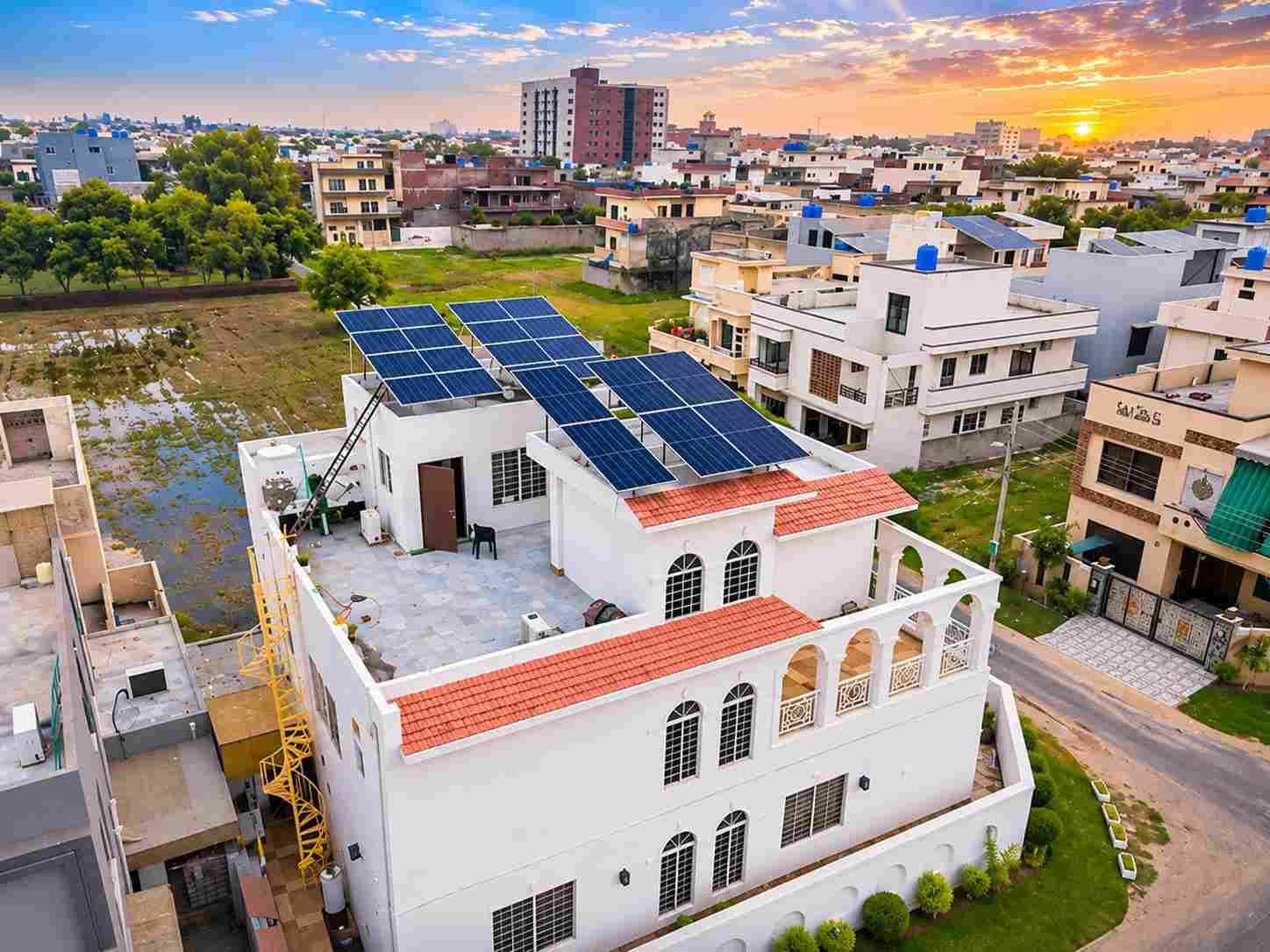
The Punjab government has approved the second phase of the Chief Minister's Solar Panel Scheme, expanding its target to provide free solar systems to 100,000 households across the province.
The decision was announced following a high-level energy sector meeting chaired by Chief Minister Maryam Nawaz Sharif in Lahore on Thursday, November 19, 2026.
According to reports published by Business Recorder, The News and Dunya News, the chief minister directed officials to increase the second phase's target from 90,000 to 100,000 beneficiaries.
The initiative is part of Punjab's broader efforts to promote renewable energy, reduce dependence on conventional electricity and provide financial relief to households struggling with rising energy costs.
During the meeting, Provincial Minister Faisal Khokhar and the Energy Department secretary briefed the chief minister on the progress of the programme and other renewable energy projects.
Officials revealed that more than 350,000 applications were received during the scheme's first phase.
Of those applicants, 89,869 households had received free solar systems.
According to the provincial government's briefing, participating households experienced electricity bill reductions of approximately one-third.
The figures were presented by government officials during the meeting and reflect reported programme outcomes rather than an independently audited assessment of every beneficiary's savings.
Key details of the announcement:
Province: Punjab, Pakistan.
Chief Minister: Maryam Nawaz Sharif.
Decision date: November 19, 2026.
Programme: CM Solar Panel Scheme, Phase II.
Previous Phase II target: 90,000 beneficiaries.
Revised Phase II target: 100,000 beneficiaries.
Increase: 10,000 additional beneficiaries over the earlier target.
Phase I applications: More than 350,000.
Phase I beneficiaries: 89,869 households.
Reported bill savings: Approximately one-third.
Phase II registration: New application dates and procedures have not yet been announced.
The decision marks a significant expansion of Punjab's household solar programme.
However, approval of the revised target does not mean that installations for all 100,000 Phase II beneficiaries have already been completed.
Further details concerning registration, beneficiary selection and implementation are expected from the provincial authorities.
2. Punjab Announces Solar Initiatives for Cholistan, Hospitals and Schools
Alongside the expansion of the CM Solar Panel Scheme, the Punjab government announced additional renewable energy projects aimed at improving electricity access and reducing reliance on conventional energy sources.
Chief Minister Maryam Nawaz gave in-principle approval for a pilot project involving the installation of 5,000 solar panels in Cholistan.
The initiative is intended to improve the availability of renewable energy in the desert region, where access to reliable electricity can be challenging.
The government also approved in principle plans to convert water supply systems at 40 locations in Cholistan to solar power.
These projects could help reduce electricity-related operating costs and improve the reliability of water supply infrastructure.
However, the final implementation schedules and detailed budgets for these initiatives have not yet been publicly confirmed.
During the meeting, the chief minister also directed officials to conduct energy audits of major hospitals across Punjab.
The assessments are intended to identify electricity requirements and determine suitable energy solutions for healthcare facilities.
Authorities were instructed to plan electrical and solar installations according to the actual power requirements of the hospitals.
The meeting was further informed that 76 schools across Punjab had already been shifted to solar energy under a pilot initiative.
These developments reflect the provincial government's intention to expand renewable energy beyond residential consumers.
Additional energy initiatives announced include:
A proposed 5,000-panel solar pilot project in Cholistan.
Solar conversion of water supply schemes at 40 Cholistan locations.
Energy audits of major hospitals across Punjab.
Solar installations based on hospital energy requirements.
Expansion of renewable energy facilities in public institutions.
Continued evaluation of solar systems already installed in 76 schools.
The proposed Cholistan projects are separate from the household beneficiary target under Phase II of the CM Solar Panel Scheme.
The government has not yet confirmed the final commissioning dates for the newly announced projects.
3. New Solar Scheme Phase Could Reduce Electricity Costs for More Families
The expansion of Punjab's solar programme comes as electricity affordability remains an important concern for households across Pakistan.
Rooftop solar systems allow consumers to generate electricity using sunlight, potentially reducing the amount of energy purchased from the national grid.
For eligible low-consumption households, government-supported solar installations can lower upfront costs that might otherwise prevent families from adopting the technology.
Under the earlier CM Free Solar Panel Scheme, the Punjab government targeted domestic electricity consumers using up to 200 units per month, subject to eligibility conditions.
However, the provincial government has not yet announced whether the eligibility criteria, electricity consumption limits or selection process will remain unchanged for Phase II.
Residents interested in applying should therefore wait for official instructions rather than assuming that the previous application procedure remains open.
The expansion may also create opportunities for businesses involved in the supply, installation and maintenance of solar equipment.
However, the economic impact will depend on implementation, procurement arrangements, installation quality and the performance of the systems supplied.
Punjab Also Reviews Bioenergy and Waste-to-Energy Projects
The November 19 meeting also examined opportunities to produce electricity and fuel from animal, agricultural and municipal waste.
The chief minister approved in principle a pilot project involving energy production from 3,000 tonnes of waste.
Officials also reviewed a proposed biorefinery in Nankana Sahib that could utilise agricultural residues.
The government directed relevant departments to prepare plans for additional waste-to-energy and biofuel projects in coordination with the Suthra Punjab programme.
These initiatives are intended to explore alternative energy sources and make productive use of agricultural and municipal waste.
However, projected electricity generation and biogas potential remain dependent on technical feasibility, available infrastructure and future investment.
When Will Phase II Registration Begin?
As of November 20, 2026, no confirmed new registration opening date, application deadline or final eligibility criteria for Phase II have been announced in the reports reviewed.
Applicants should follow official updates from the Punjab Energy Department and avoid unofficial websites or social media messages claiming that registration is already available.
Residents should also avoid making payments to individuals offering guaranteed selection or early registration without official authorisation.
The second phase represents a significant expansion of Punjab's renewable energy assistance programme.
Its success will depend on transparent beneficiary selection, timely installations and measurable improvements in electricity affordability.
For now, the government has confirmed its decision to increase the programme's target to 100,000 beneficiaries, while the detailed rollout process remains to be announced.
Editor's Note
Radar Pakistan will continue monitoring the second phase of the CM Solar Panel Scheme, including official registration dates, eligibility requirements, beneficiary selection and installation progress. The Punjab government approved the revised 100,000-beneficiary target on November 19, 2026. New application procedures and final implementation details have not yet been officially announced.