1. NADRA Introduces Digital Chatbot for Succession Certificate Guidance
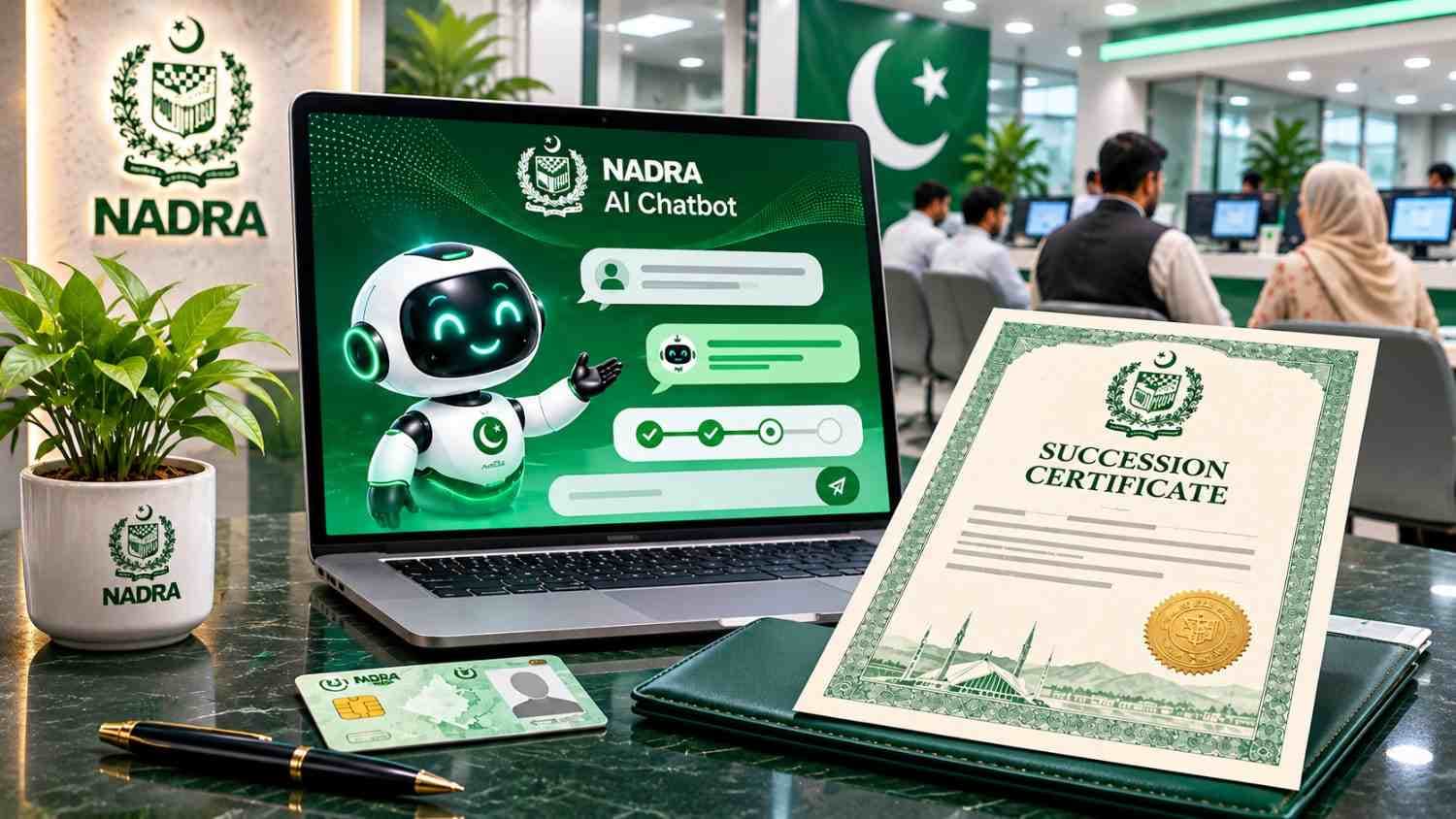
The National Database and Registration Authority (NADRA) has introduced an automated chatbot to simplify the process of obtaining succession certificates and letters of administration in Pakistan.
The development was reported on November 11 and 12, 2026, as part of NADRA's efforts to improve digital public services and reduce difficulties faced by families dealing with inheritance matters.
The chatbot, named “ID”, is available through NADRA's revamped succession website and can be accessed using mobile phones and computers.
According to NADRA spokesperson Syed Shabahat Ali, the system allows applicants to receive case-specific guidance without initially visiting a NADRA registration centre.
Instead of providing the same instructions to every applicant, the chatbot asks questions about the deceased person, legal heirs and the assets involved.
Based on the answers, it generates a personalised checklist of documents and outlines the steps required to proceed with an application.
The service operates in Urdu and English, making it accessible to a wider range of Pakistani citizens.
Key features of NADRA's new chatbot include:
Service name: ID chatbot.
Responsible authority: National Database and Registration Authority (NADRA).
Announcement reported: November 11–12, 2026.
Available languages: Urdu and English.
Access: NADRA's succession website through mobile phones and computers.
Primary service: Guidance for succession certificates and letters of administration.
Document assistance: Personalised checklists based on individual circumstances.
Privacy: No CNIC number or other sensitive identification details required for initial chatbot guidance.
Overseas assistance: Information about biometric verification through Pak ID.
NADRA has clarified that the chatbot is an information and guidance tool rather than a replacement for the formal application process.
The service is intended to help families prepare the correct documentation before approaching the relevant registration centre.
Applicants must still satisfy the legal requirements applicable to their particular cases.
2. How the Chatbot Helps Families With Inheritance Documentation
Obtaining a succession certificate can involve several procedural requirements, particularly when families must provide documents relating to the deceased, legal heirs and inherited property.
The requirements may differ depending on the nature of the assets, the province involved and the legal circumstances of the family.
NADRA's new chatbot aims to make these requirements easier to understand.
After answering a series of questions, users receive guidance tailored to their circumstances, helping them identify the documents required before formally applying.
The system also identifies the relevant NADRA office and informs applicants when their cases may require legal proceedings.
For example, cases involving disputes between legal heirs, minor heirs or other legal complications may need to be handled through a court rather than NADRA's uncontested succession procedure.
NADRA has been issuing succession certificates and letters of administration in uncontested cases since 2021.
A succession certificate generally concerns movable assets, while a letter of administration relates to immovable property, subject to the applicable legal framework.
Documents commonly required for an application include:
Death certificate issued by the relevant authority.
Proof of cancellation of the deceased person's CNIC.
Family Registration Certificate (FRC).
Copies of the CNICs of all legal heirs.
Details of the deceased person's movable and immovable assets.
An authorisation letter or affidavit attested by an oath commissioner.
Original property documents, where applicable.
Additional documents required under provincial rules or specific circumstances.
For applicants in Sindh, additional requirements may include a property search certificate.
Where lawyers are permitted to submit applications on behalf of legal heirs, the relevant power-of-attorney documentation may also be required.
The chatbot can help users identify such requirements before beginning their formal application.
It also provides information for overseas Pakistanis whose family members need to complete biometric verification through NADRA's Pak ID services.
However, the chatbot does not automatically verify inheritance claims, resolve family disputes or issue legally valid certificates.
NADRA advises applicants to confirm the final documentation requirements with the appropriate registration centre before submitting an application.
3. NADRA Succession Certificate Fees and Benefits of the New Service
The new chatbot could reduce unnecessary visits to NADRA offices by allowing families to prepare their documents in advance.
For people living in remote areas or managing inheritance matters from another city, clearer information may help minimise repeated travel and administrative delays.
The system also supports NADRA's broader efforts to improve public access to government services through digital technology.
Importantly, the introduction of the chatbot does not change the legal requirements or official fees associated with obtaining succession certificates and letters of administration.
According to NADRA's published fee structure, the applicable charges depend on the value of the assets involved.
Reported application fees:
Assets valued below Rs100,000: Rs10,000.
Assets valued at Rs100,000 or more: Rs20,000.
Sindh: Rs22,000 for the higher-value category.
Duplicate certificate: Rs5,000.
Applicants should confirm the latest applicable charges and any additional requirements before making payments.
The new digital service may also improve awareness of the difference between straightforward inheritance cases and matters requiring judicial intervention.
Under the applicable framework, NADRA generally handles cases where the legal heirs agree and the inheritance claim is uncontested.
Where a dispute exists or the case falls outside NADRA's legal authority, applicants may need to pursue the matter before the relevant court.
The chatbot is designed to identify such situations at an early stage.
Potential benefits of the initiative include:
Easier access to inheritance-related information.
Reduced confusion about required documentation.
Fewer unnecessary visits to government offices.
Improved guidance for overseas Pakistanis.
Early identification of cases requiring court proceedings.
Greater accessibility through Urdu and English.
More efficient preparation of formal applications.
The service represents a practical development in Pakistan's digital governance efforts.
However, its effectiveness will depend on the accuracy of its guidance, regular updates to reflect legal requirements and the ability of applicants to obtain further assistance when needed.
For families dealing with inheritance matters, the new facility could make the initial stages of the succession application process more manageable.
The chatbot offers a convenient starting point, while NADRA's formal verification and approval procedures remain essential before any certificate can be issued.
Editor's Note
Radar Pakistan will continue monitoring NADRA's digital service initiatives, including the new succession chatbot, application procedures, eligibility requirements and any changes to official fees. The ID chatbot provides preliminary guidance and does not replace formal NADRA verification or court proceedings where required. Applicants should confirm final requirements through official NADRA channels.