1. Government Considers Expanding Islamabad's Boundaries to Neighbouring Districts
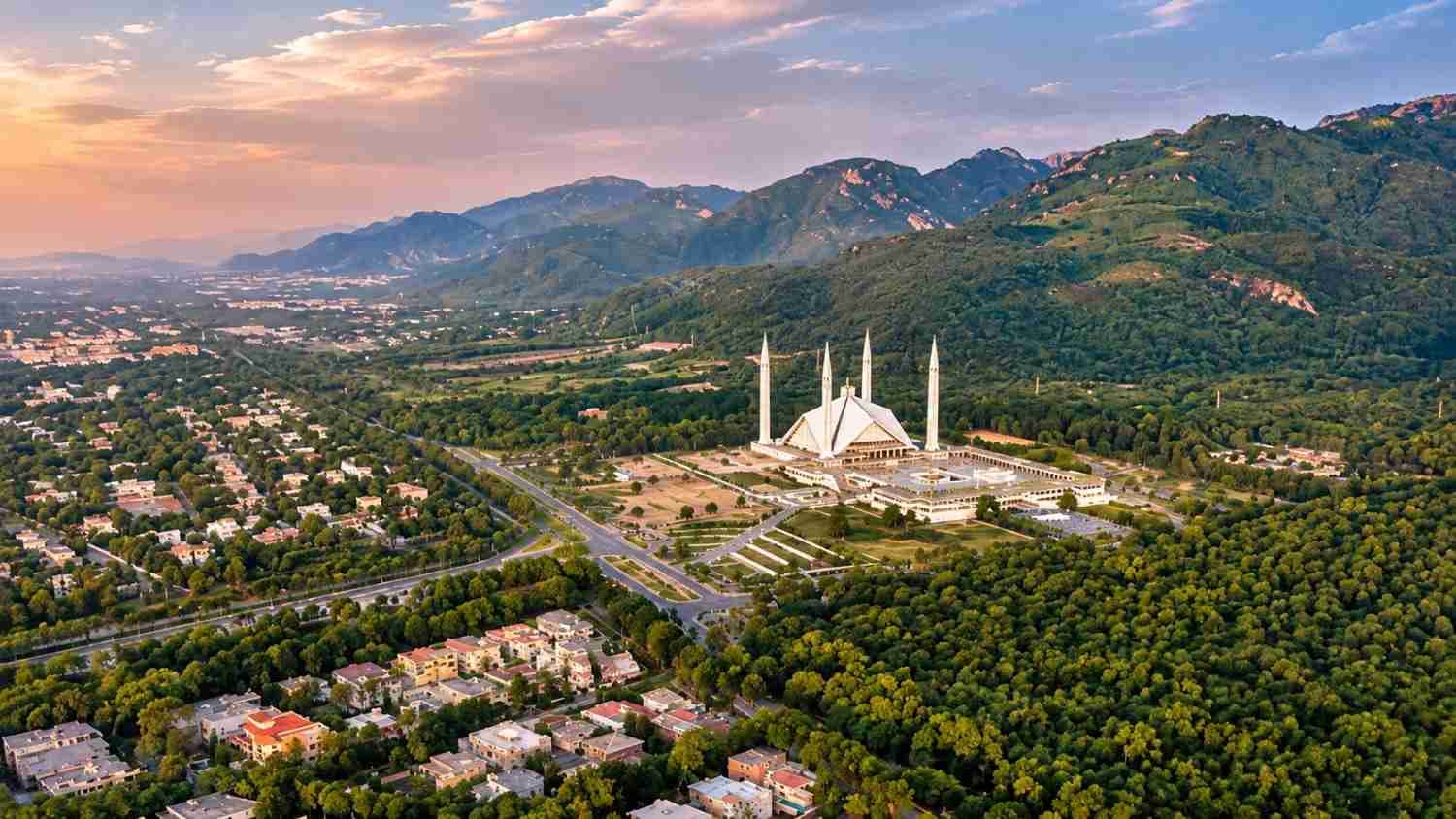
The federal government is considering a significant expansion of Islamabad's geographical boundaries as part of a broader proposal to reform the capital's administrative and governance structure.
According to reports published on November 15 and 16, 2026, the proposed changes could bring selected areas of Rawalpindi and Murree in Punjab, along with parts of Haripur district in Khyber Pakhtunkhwa, under Islamabad's administrative jurisdiction.
The development comes as the government explores granting Islamabad a special administrative status and establishing a more independent local governance system.
Reports by Dawn, Dunya News and The Nation indicate that government officials are examining options for reorganising the capital's administrative structure and geographical limits.
Under the proposal, certain areas within National Assembly constituency NA-51 in Murree district could be considered for inclusion in Islamabad.
Selected localities of Rawalpindi and areas of Haripur are also being discussed.
However, the government has not released an approved map identifying the precise areas that could be affected.
A senior government official told Dawn on November 16 that discussions regarding the inclusion of neighbouring districts remain preliminary.
The official explained that legal and administrative complications would need to be addressed because the proposed areas currently belong to separate provinces.
Key details of the proposal include:
Federal capital: Islamabad.
Latest reports: November 15–16, 2026.
Proposed expansion: Selected areas of neighbouring districts.
Rawalpindi: Certain localities under consideration.
Murree: Areas associated with NA-51 being discussed.
Haripur: Areas of the Khyber Pakhtunkhwa district under consideration.
Administrative reform: A proposed separate legislative assembly.
Proposed leadership: An elected mayor or chief executive.
Final territorial decision: Not announced.
Implementation timeline: Not officially confirmed.
The reported expansion would represent a substantial change to Islamabad's existing administrative arrangements if approved.
However, the proposal should not be interpreted as confirmation that Rawalpindi, Murree or Haripur have already become part of the federal capital.
2. Islamabad Could Receive Separate Legislative Assembly and Mayor-Led Administration
Alongside the possible territorial expansion, the federal government is examining a new governance framework for Islamabad.
The proposed system would provide the capital with a separate elected legislative assembly and a locally accountable administrative leadership.
According to Dawn, a high-level committee chaired by Federal Planning Minister Ahsan Iqbal previously developed recommendations aimed at transferring certain governing responsibilities from the federal administration to a new Islamabad administrative unit.
The recommendations were presented to Prime Minister Shehbaz Sharif.
Under the earlier proposal, Islamabad would have a 27-member legislative assembly led by an elected mayor or chief minister.
More recent reports suggest that the proposed governing body could consist of approximately 25 to 30 elected members, with a mayor serving as the capital's administrative head.
The difference reflects the fact that various governance models remain under discussion.
A final structure has not yet been formally approved.
The proposed arrangement could give Islamabad greater authority over local matters while retaining appropriate federal oversight.
Major features being discussed include:
Establishment of a separate legislative assembly for Islamabad.
An elected mayor serving as administrative head.
Approximately 25 to 30 members under the newer reported model.
A previous recommendation for a 27-member assembly.
Greater administrative authority for elected representatives.
Improved coordination between local and federal institutions.
Possible changes to how public services and municipal responsibilities are managed.
Supporters of stronger local governance argue that it could make Islamabad's administration more responsive to residents.
An elected administration could potentially improve accountability and enable locally focused decisions on public services, infrastructure and development priorities.
However, the precise distribution of powers between federal authorities and the proposed capital administration remains unresolved.
The government would also need to determine how the proposed structure would interact with existing institutions, including the Capital Development Authority and other administrative bodies.
3. Legal Challenges and Local Government Elections Remain Key Issues
The proposed expansion raises important constitutional, legal and administrative questions.
Rawalpindi and Murree are currently part of Punjab, while Haripur belongs to Khyber Pakhtunkhwa.
Transferring territory from either province into Islamabad would require careful consideration of the constitutional framework governing provincial boundaries.
Article 239(4) of Pakistan's Constitution provides that a constitutional amendment affecting the territorial limits of a province requires approval by at least two-thirds of the total membership of the affected provincial assembly.
Any expansion involving changes to provincial boundaries would therefore require the appropriate constitutional and legislative procedures.
The government has not publicly announced that such approvals have been obtained.
The proposal could also have implications for electoral representation, taxation, local government administration, policing and public services.
Residents of any affected areas would need clear information about which authorities would manage their local affairs if a boundary change were eventually approved.
Meanwhile, Islamabad's existing local government election process faces separate legal uncertainty.
The Islamabad High Court suspended the election schedule for December 20, 2026, after a petition challenged the legal basis of constituency delimitation.
The Election Commission of Pakistan subsequently suspended the election programme in compliance with the court's order.
The matter is scheduled for further hearing on November 26, 2026.
Major issues requiring clarification include:
The exact geographical boundaries proposed for expansion.
Constitutional and legislative approvals for any territorial changes.
The role of Punjab and Khyber Pakhtunkhwa in the process.
The composition and powers of Islamabad's proposed assembly.
The administrative responsibilities of the elected mayor.
The future of existing local government institutions.
Electoral representation for residents of any newly included areas.
A formal implementation schedule and transition framework.
The broader reforms could reshape how Islamabad is governed if they receive the necessary political, legal and administrative approvals.
However, no official notification has confirmed the incorporation of neighbouring districts into the federal capital.
The next major development will be the publication of a formal government proposal or legislative framework explaining the intended changes.
For now, the proposed expansion remains under consideration, while the establishment of a separate legislative assembly has emerged as a central element of the government's administrative reform discussions.
Editor's Note
Radar Pakistan will continue monitoring the federal government's proposed administrative reforms for Islamabad, including discussions over incorporating parts of Rawalpindi, Murree and Haripur into the capital. As of November 16, 2026, no final decision has been announced on the proposed boundary changes. Any future implementation would require the relevant legal and administrative procedures.