
1. PTA Finalises New Rules for Satellite-Based Internet on Flights
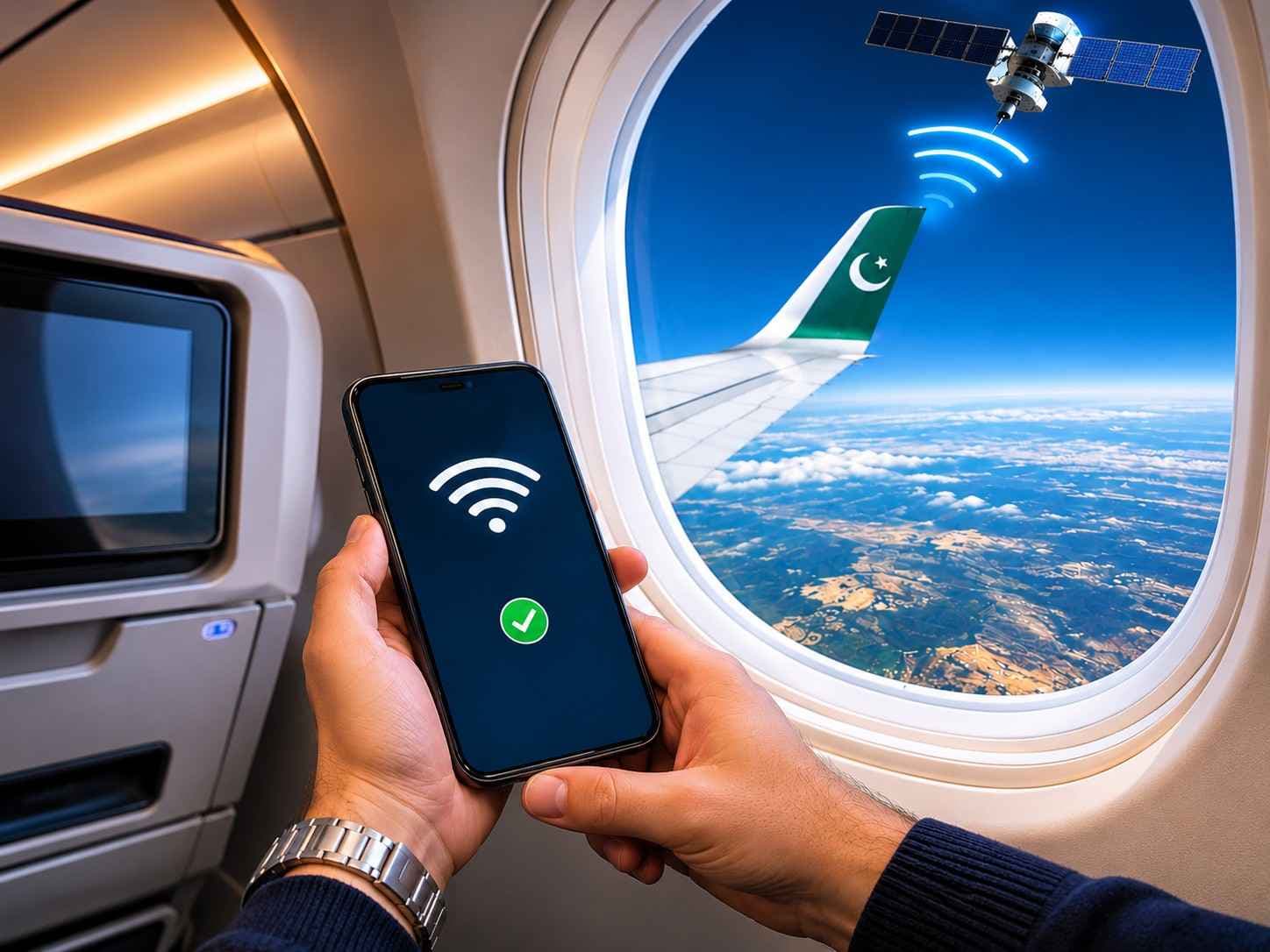
Pakistan has moved closer to introducing satellite-based internet services aboard commercial aircraft following the finalisation of a new licensing framework by the Pakistan Telecommunication Authority (PTA).
The authority announced the development on Tuesday, November 17, 2026, establishing regulatory requirements for companies seeking to provide internet and telecommunications services during flights.
The new framework covers Satellite-Based In-Flight Telecommunication Services (ITS), which allow passengers to access digital communication networks through satellite connections while travelling by air.
According to the PTA, licensed service providers will be permitted to offer satellite connectivity aboard Pakistani-registered aircraft, provided they fulfil the necessary licensing and registration conditions.
The announcement represents an important development in Pakistan's aviation and telecommunications sectors, where modern in-flight connectivity has become an increasingly valuable service for international travellers.
Under the new regulations, satellite operators must be registered with the Pakistan Space Activities Regulatory Board (PSARB), while service providers must meet PTA's licensing requirements.
Foreign aircraft travelling through Pakistani airspace will also need appropriate regulatory clearance to operate covered telecommunications services.
The authority believes the initiative will improve passenger convenience and expand Pakistan's digital communication infrastructure beyond ground-based networks.
Key details of the announcement:
Regulatory authority: Pakistan Telecommunication Authority (PTA).
Announcement date: November 17, 2026.
Service: Satellite-Based In-Flight Telecommunication Services.
Coverage: Pakistani-registered aircraft and eligible aircraft using Pakistani airspace.
Satellite registration: Required through the Pakistan Space Activities Regulatory Board.
Transit aircraft: PTA no-objection certificate required, subject to applicable conditions.
Licence fee: Reportedly $10,000.
Licence validity: 10 years.
Minimum operating altitude: 3,000 metres above ground level under the reported framework.
Commercial availability: No launch date officially announced.
The finalisation of the rules does not mean that airlines have immediately started providing Wi-Fi services on all flights.
Instead, it establishes the regulatory framework needed for service providers and airlines to introduce such facilities after completing the required approvals.
2. Satellite Internet Could Allow Passengers to Stay Connected During Flights
The introduction of satellite-based internet could significantly improve the travel experience for passengers using Pakistani airlines and eligible international flights.
Traditionally, access to mobile networks becomes limited during flights because aircraft operate far above the coverage of conventional cellular infrastructure.
Satellite-based connectivity addresses this limitation by allowing aircraft to communicate with satellite networks through specialised equipment.
Passengers typically access the connection through an onboard Wi-Fi network, while the aircraft communicates with the satellite system.
This arrangement can support internet access during eligible stages of a flight, subject to airline equipment, network coverage and regulatory conditions.
According to the PTA, the proposed services could allow passengers to access online entertainment, digital communication platforms and work-related applications.
Potential services available to passengers include:
Internet browsing: Accessing websites and online information.
Messaging: Communicating with family members and colleagues through supported applications.
Entertainment: Accessing online media and other digital content.
Business communication: Using email and work-related platforms.
Travel convenience: Remaining connected during eligible portions of a journey.
Digital productivity: Working on online documents and cloud-based services where supported.
For Pakistani travellers, the facility could be particularly valuable on longer international routes.
Business travellers may be able to manage important communications while flying, while other passengers could use the connection for entertainment or personal communication.
However, the actual experience will depend on the technology installed by individual airlines, the satellite provider, available bandwidth and service packages.
Not every airline or aircraft will necessarily introduce the service at the same time.
Technical and Security Requirements
The licensing framework also introduces requirements concerning network infrastructure and regulatory compliance.
According to detailed reporting by Dawn, in-flight internet providers will be required to route telecommunications traffic through licensed satellite gateway earth stations located within Pakistan.
The reported conditions also require user data generated, stored or processed under the service to remain within Pakistan.
Providers must obtain international internet bandwidth through an appropriately licensed Long Distance and International operator.
The use of radio frequencies will remain subject to the relevant spectrum allocation rules.
The Pakistan Civil Aviation Authority's applicable safety requirements must also be followed.
These measures are intended to ensure that in-flight connectivity is introduced within the country's telecommunications and aviation regulatory framework.
Technical implementation, data protection practices and operational arrangements will remain important considerations for airlines and service providers.
3. When Will Satellite Wi-Fi Become Available on Pakistani Airlines?
Although the PTA has finalised its regulatory framework, a confirmed commercial launch date for satellite internet on Pakistani aircraft has not been announced.
The next stage will involve service providers obtaining the necessary licences and completing satellite registration requirements.
Airlines interested in offering in-flight connectivity will also need to make appropriate technical and commercial arrangements.
Aircraft may require installation or certification of satellite communications equipment, while operators will need to ensure compliance with aviation safety standards.
The Pakistan Space Activities Regulatory Board has already introduced regulations governing the registration of Geostationary Satellite Orbit communication operators.
On November 18, reporting indicated that the board had begun receiving registration applications from interested satellite operators.
However, the submission of applications does not establish that any airline has already launched a commercially operational satellite Wi-Fi service under the new framework.
Major steps before commercial introduction include:
Completion of satellite operator registration with PSARB.
Acquisition of the applicable PTA service licence.
Compliance with telecommunications and spectrum requirements.
Installation and approval of aircraft connectivity equipment.
Fulfilment of aviation safety requirements.
Commercial agreements between airlines and technology providers.
Announcement of passenger internet packages and charges.
Confirmation of the first operational routes and launch dates.
The PTA has not identified which Pakistani airline will be the first to offer the new service.
No official announcement has confirmed whether access will be free, included in ticket prices or sold through separate internet packages.
Reports have also not established whether particular international satellite internet companies will provide the initial connections.
Consequently, claims that specific providers have already secured commercial contracts should be treated cautiously unless supported by formal announcements.
The new framework could eventually create opportunities for aviation operators, satellite communications companies and digital infrastructure providers.
It could also improve the competitiveness of participating airlines by helping them meet evolving passenger expectations.
However, the quality and affordability of future services will depend on the available technology, network performance and airline pricing decisions.
The development also demonstrates Pakistan's growing interest in satellite communications as part of its wider digital connectivity strategy.
For passengers, the most important distinction is that the country has now established a regulatory pathway for in-flight satellite internet, but commercial access remains dependent on further approvals and implementation.
The next major development will be confirmation of licensed service providers, participating airlines and an official operational launch schedule.
Editor's Note
Radar Pakistan will continue monitoring the implementation of PTA's satellite-based in-flight telecommunications framework, including licensing approvals, satellite operator registration, airline participation and passenger pricing. The regulatory framework was finalised on November 17, 2026. As of November 20, no confirmed commercial launch date or airline-specific rollout has been announced.